
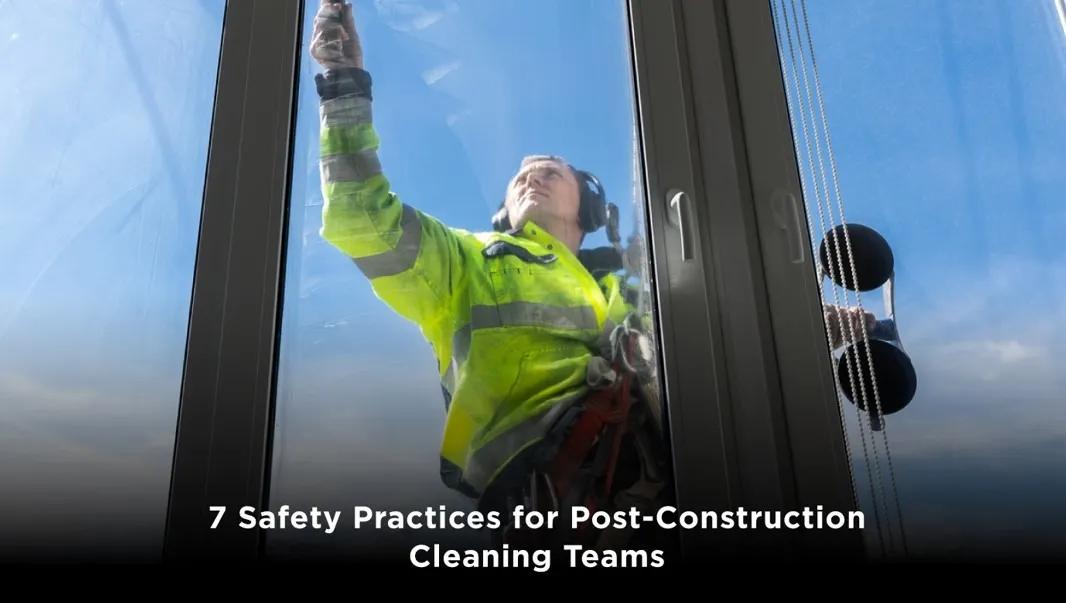
Construction sites present unique risks even after major building work is complete. Post-construction cleaning requires teams to operate around unfinished surfaces, residual debris, dust accumulation, exposed fixtures, and recently installed materials. Without proper safety procedures, cleaning crews face hazards ranging from sharp debris to airborne particles. Structured safety practices ensure that post-construction cleaning is completed efficiently while protecting both workers and the property.
Post-construction cleaning services often begin during late-stage construction or immediately before final turnover. At this phase, conditions may still involve active subcontractors, incomplete punch lists, or partially installed systems. A disciplined safety framework reduces accidents, supports compliance, and ensures cleaning teams can work productively in complex commercial environments.
1. Conduct a Site Safety Assessment Before Cleaning Begins
Before beginning professional post-construction cleaning, supervisors should perform a walkthrough to identify hazards. This assessment includes evaluating exposed wiring, unstable surfaces, unsecured materials, and high-dust zones. Identifying risks early allows teams to plan proper protective measures and equipment deployment.
A pre-cleaning assessment also clarifies access routes, emergency exits, and restricted areas. Establishing safe entry and exit paths protects workers and reduces liability for property managers.
2. Use Personal Protective Equipment Consistently
Post-construction cleaning exposes crews to fine dust, silica particles, sharp fragments, and chemical residues. Personal protective equipment is essential for minimizing injury and respiratory exposure.
Standard protective gear often includes:
• Respirators or dust masks rated for fine particles
• Safety glasses or protective eyewear
• Cut-resistant gloves
• Slip-resistant footwear
• High-visibility vests when required
Using proper equipment reduces long-term health risks and prevents immediate workplace injuries. Consistent enforcement of PPE policies strengthens overall job site safety.
3. Control Airborne Dust and Particulate Exposure
Construction dust can settle deep within ventilation systems, ceilings, and flooring seams. Without proper extraction methods, airborne particles may circulate throughout the building. Professional post-construction cleaning teams rely on HEPA-filtered vacuums and microfiber systems to capture fine debris safely.
Airborne dust control is particularly important in large commercial and corporate facilities where HVAC systems distribute air quickly. Controlled removal prevents secondary contamination and improves indoor air quality before occupancy.
4. Remove Sharp Debris and Hazardous Materials Safely
Construction areas often contain nails, screws, broken glass, and metal fragments. Safe removal requires structured collection methods and appropriate disposal containers. Teams should never sweep sharp materials into open piles or handle debris without protective gloves.
Post-construction janitorial services must also confirm that hazardous chemicals or leftover materials from contractors are properly identified before cleaning begins. Clear communication with project managers ensures that unknown substances are not handled improperly.
5. Ensure Stable Access to Elevated Areas
Cleaning light fixtures, vents, windows, and ceiling surfaces frequently requires ladders or elevated platforms. Teams must inspect equipment before use and confirm that flooring surfaces are stable. Ladders should be placed on level ground and positioned away from unsecured debris.
Proper ladder safety training reduces fall-related injuries, which are among the most common job site accidents during post-construction cleaning.
6. Follow Chemical Handling and Surface Protection Guidelines
Professional post-construction cleaning often involves removing adhesive residue, paint overspray, and grout haze. Using incorrect chemicals can damage newly installed surfaces. Cleaning crews must follow manufacturer recommendations and safety data sheets when applying solvents or cleaning agents.
Chemical handling procedures should include:
• Proper dilution practices
• Ventilation awareness
• Safe storage between uses
• Clear labeling of containers
Adhering to these protocols protects both workers and property finishes.
7. Coordinate with Construction Supervisors
Communication between cleaning teams and site supervisors improves safety outcomes. Coordinating schedules prevents overlap with active trades that may introduce new hazards. Clear communication also ensures that power systems, lighting, and water access are stable before cleaning begins.
Post-construction janitorial services operate most effectively when they are integrated into the overall project timeline. Structured coordination reduces confusion and enhances job site control.
The Importance of Ongoing Safety Training
Safety practices must be reinforced regularly. Training sessions on equipment usage, dust control methods, and chemical handling ensure teams remain aware of evolving site conditions. Supervisory oversight strengthens compliance and builds accountability across large commercial projects.
Professional post-construction cleaning requires not only technical expertise but also consistent safety awareness. A structured training program ensures crews maintain high standards from initial debris removal through final detailing.
Frequently Asked Questions
Why is dust control so important during post-construction cleaning?
Construction dust contains fine particles that can irritate lungs and settle into HVAC systems. Without proper extraction, these particles may continue circulating after occupancy. HEPA filtration and microfiber cleaning methods reduce airborne contamination effectively.
What protective equipment is most critical for cleaning crews?
Respiratory protection, safety eyewear, gloves, and slip-resistant footwear are essential. These items reduce exposure to dust, prevent cuts from sharp debris, and protect against slips on unfinished surfaces.
How do cleaning teams prevent surface damage during final cleanup?
Teams follow manufacturer guidelines for newly installed materials and use non-abrasive cleaning tools. Testing cleaning agents on small areas before full application also prevents finish damage.
Are post-construction janitorial services performed while construction is still active?
Often, yes. Rough cleaning may occur before final inspections. However, safety coordination with site supervisors ensures crews are not exposed to unnecessary hazards from active trades.
What role does supervision play in maintaining safety?
Supervisors conduct walkthroughs, enforce PPE requirements, and monitor adherence to safety protocols. Regular oversight ensures that safety practices remain consistent throughout the project.
Summary
Post-construction cleaning environments contain unique hazards that require structured safety practices. From site assessments and dust control to protective equipment and coordinated scheduling, safety protocols protect both cleaning crews and property assets. Post-construction janitorial services that prioritize worker protection, proper equipment use, and clear communication deliver efficient results while minimizing risk across commercial and corporate projects.
Best Post-Construction Cleaning Services in Los Angeles
Jan-Serve provides top-quality post-construction cleaning services in Los Angeles. If you’re ready to reap the benefits of having an immaculately clean space on a regular basis, turn to Jan-Serve for a professional job you can count on. Get a free quote today at 888-497-3704.
