
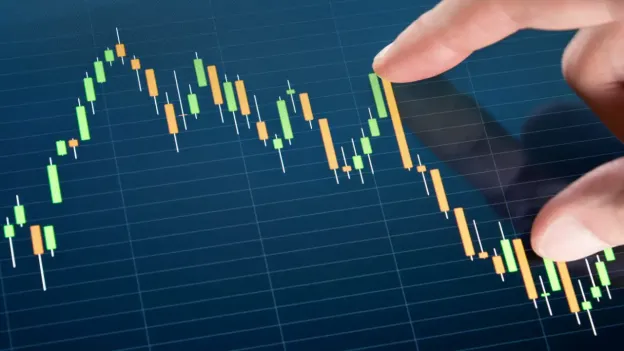
The foreign exchange market can change direction within minutes, influenced by economic announcements, central bank decisions, political developments, investor sentiment, and global risk conditions. For traders, recognising these shifts early is not simply about watching price charts; it requires understanding the forces that move currencies. This is where forex market insights become valuable. By combining economic information, market data, technical indicators, and broader financial developments, traders can build a more informed view of potential market movements and make decisions based on evidence rather than assumptions.
Understanding What Drives Forex Trends
Forex trends represent the broader direction in which a currency pair moves over a particular period. While a chart may show whether prices are rising or falling, understanding why that movement is occurring can provide greater context. Several factors can influence currency trends. Interest-rate expectations are among the most important because differences between central bank policies can affect the attractiveness of one currency relative to another. Inflation, employment figures, economic growth, trade balances, and consumer confidence can also influence expectations about future monetary policy.
Global events matter as well. Political uncertainty, geopolitical tensions, changes in commodity prices, and shifts in investor risk appetite can create sudden movements across currency markets. Monitoring these influences helps traders distinguish between temporary price fluctuations and developments that could support a more sustained trend.
Why Market Insights Matter to Traders
Market information becomes more useful when it is organised into a clear analytical framework. Instead of looking at individual economic announcements in isolation, traders can examine how different factors interact. For example, stronger-than-expected employment data may increase expectations of tighter monetary policy. If investors believe higher interest rates could follow, demand for the relevant currency may increase. However, the actual market response can depend on what traders had already anticipated. This demonstrates why context is essential.
Quality market analysis can help traders:
● Identify factors influencing currency movements
● Understand potential changes in market sentiment
● Recognise developing bullish or bearish conditions
● Compare economic conditions between countries
● Assess possible catalysts for increased volatility
● Combine fundamental information with technical analysis
These insights do not predict the market with certainty. Instead, they provide a stronger foundation for evaluating possibilities and managing uncertainty.
The Role of Economic Data
Economic indicators are an important component of forex analysis because they offer clues about the health and direction of an economy. Traders commonly monitor inflation reports, employment statistics, gross domestic product figures, manufacturing data, retail sales, and central bank communications. However, the significance of an indicator often depends on expectations. A result that appears positive on its own may have little impact if markets had already priced it in. Conversely, an unexpected result can produce a substantial reaction.
For this reason, traders should consider three elements: the previous figure, the market forecast, and the actual release. Comparing these figures can reveal whether an announcement materially changes the economic outlook. Central bank meetings deserve particular attention. Statements from policymakers can influence expectations surrounding interest rates, inflation, and economic growth. Even subtle changes in language can affect sentiment and trigger movement in major currency pairs.
Using a Forex Index for Broader Context
Individual currency pairs can sometimes provide an incomplete picture of currency strength. A forex index can help traders evaluate the performance of a currency against a broader basket or benchmark, depending on the index being used. This wider perspective can be particularly useful when analysing whether a currency’s movement is driven by its own underlying strength or by weakness in its counterpart.
For instance, if a currency pair rises, examining broader currency performance may help determine whether the base currency is strengthening across the market or whether the quoted currency is simply under pressure. Indices can therefore complement pair-specific analysis. They can help traders observe broader trends, compare relative performance, and identify changes in market momentum.
The Importance of Market Sentiment
Price movements are not driven solely by economic statistics. Market sentiment can influence how traders interpret information and how aggressively they respond to it. During periods of uncertainty, investors may become more defensive and shift towards assets or currencies perceived as relatively resilient. When confidence improves, risk appetite may increase, potentially changing demand across currency and other financial markets.
News sentiment, geopolitical developments, and changes in global risk expectations can therefore provide useful context. Traders who monitor sentiment alongside economic and technical information may be better positioned to understand why prices behave differently under seemingly similar circumstances.
Turning Insights into a Trading Approach
Information alone does not create a trading strategy. The key is to convert relevant observations into a structured decision-making process. Traders can begin by identifying the currencies and economic themes they want to follow. They can then monitor important announcements, central bank developments, market sentiment, and technical conditions. Establishing a trading plan can help determine entry criteria, exit conditions, position sizing, and acceptable risk before a trade is placed.
Risk management should remain central to this process. Stop-loss levels, appropriate position sizes, diversification, and realistic expectations can help limit the impact of unfavourable market movements. No amount of analysis can eliminate uncertainty from forex trading. Maintaining a trading journal can also be useful. Recording the reasoning behind each decision allows traders to review which assumptions were accurate, which signals were misleading, and where their process could improve.
Making Better-Informed Forex Decisions
Successful forex trading is rarely about finding one perfect indicator or predicting every market movement. It is about developing a disciplined process for interpreting information and responding to changing conditions. By combining economic developments, market sentiment, technical signals, broader currency performance, and appropriate risk controls, traders can develop a more comprehensive understanding of forex trends. The objective is not to remove uncertainty but to approach it with preparation and discipline.
For traders seeking a professional environment to explore global markets, AngelSky combines multi-asset market access with trading technology, analytical capabilities, and infrastructure designed to support different trading approaches. Its emphasis on transparency, technology, global market connectivity, and trader support reflects an environment built around informed participation rather than speculation alone.
