
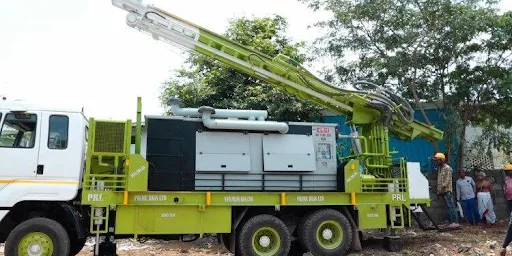
Rock drilling in mining environments requires reliable machinery capable of handling hard formations while maintaining consistent drilling performance. Blast hole drilling equipment can be considered for projects seeking suitable machinery for demanding drilling applications.
Effective rock drilling also depends on selecting the right rig configuration, drilling method, hole diameter, and compatible accessories. When these factors are properly matched, drilling operations can achieve better control, mobility, and consistency, supporting the preparation of blast holes across different mining and rock excavation environments.
Understanding Blast Hole Drilling
Blast hole drilling involves creating holes in rock formations that are subsequently used for controlled blasting. The process requires equipment capable of achieving the required hole diameter and depth while maintaining stability during operation.
Purpose-built drilling rigs can combine suitable mobility, drilling mechanisms, and tooling to address the requirements of mining environments. Equipment selection should consider the rock formation, drilling method, hole specifications, and working conditions.
Supporting Rock Penetration
A major factor in efficient rock drilling is the ability to transfer impact and drilling forces effectively into the formation. Down-the-hole hammer systems are commonly used for drilling hard rock because the hammer operates at the bottom of the hole, supporting direct impact against the formation.
A suitable drilling rig paired with the correct hammer and bit can help maintain consistent penetration while creating holes according to project requirements. This combination is particularly relevant for mining and blast hole applications where drilling performance directly affects subsequent operations.
Improving Mobility Across Mining Sites
Mining projects can cover extensive areas, requiring drilling equipment to move between different locations. Crawler-mounted configurations can provide mobility while offering a stable working platform for drilling.
Mobility allows operators to reposition equipment as drilling patterns progress. This can help organize multiple drilling points across a work area without relying solely on stationary equipment.
Choosing the Right Drilling Configuration
Different drilling projects involve different geological conditions and operational requirements. Drill machine companies may provide multiple rig configurations and drilling systems to accommodate variations in hole diameter, formation hardness, mobility requirements, and drilling methods.
Before selecting equipment, operators can evaluate factors such as drilling capacity, mounting configuration, available tooling, site accessibility, and the intended application. This approach helps ensure that the selected equipment is appropriate for the conditions in which it will operate.
Conclusion
Efficient rock drilling involves more than selecting a powerful machine. Blast hole drilling equipment must be matched with the drilling method, mobility, hole specifications, rock conditions, and compatible accessories. Understanding these factors can help mining teams select suitable machinery for blast hole applications while supporting consistent drilling performance across challenging rock formations.
With extensive industry experience and application-focused expertise, Prime Rigs offers drilling solutions for mining, blast hole, water well, construction, exploration, and specialized applications. Its portfolio includes new and refurbished drilling rigs, mining and blast hole models, drilling accessories, DTH hammers, bits, drill pipes, and related equipment. The company also provides technical support, tooling and parts packages, on-site instruction, and after-sales assistance to help customers identify suitable equipment for varied drilling requirements.
