
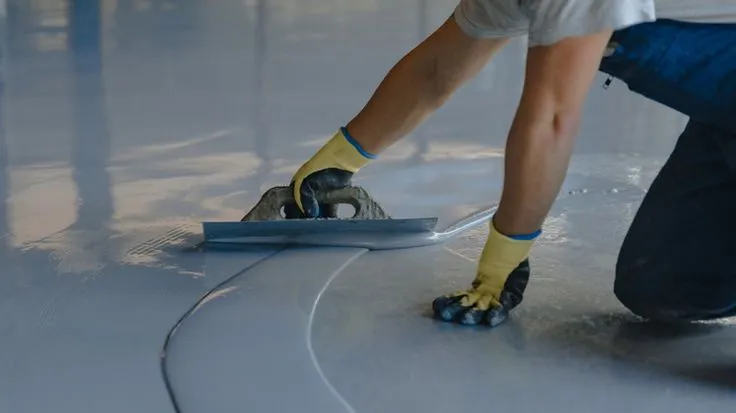
Commercial and industrial floors operate under demanding conditions. Forklifts, carts, machinery, chemicals, cleaning routines, and constant foot traffic all place stress on the surface. When a resinous floor later peels, bubbles, cracks, or separates from the concrete, the coating is not always the main problem. Performance often depends on what happened before the first layer was applied. Proper surface preparation creates the foundation that allows an epoxy system to bond and perform as intended.
A Good Floor Starts Below the Surface
Concrete may appear solid, yet dust, laitance, grease, old adhesives, curing compounds, previous coatings, and weak surface material can interfere with adhesion. Basic cleaning alone is rarely enough for a demanding commercial installation.
Mechanical preparation helps expose sound concrete and creates a profile for the coating to grip. Diamond grinding or shot blasting may be used depending on the slab and flooring specification. The goal is not simply to make the concrete look clean, but to create the physical condition needed for reliable bonding.
Cracks Need Proper Treatment
Cracks, voids, spalled areas, and damaged joints should be evaluated before coating begins. Applying epoxy directly over defects may hide them temporarily, but deterioration or movement underneath can later affect the finished surface.
An installer should determine which areas require routing, patching, filling, or other repair. Facilities searching for Expert Epoxy Floor Installers Nj should therefore pay attention to how a contractor evaluates the substrate before discussing colors or decorative finishes. The condition of the concrete is more important to long-term performance than appearance during the quotation stage.
Moisture Can Change the Specification
Moisture is another factor that can influence coating performance. Concrete may transmit moisture vapor from below, while everyday operations can also expose the slab to water. If excessive moisture is present and the flooring system is not suitable for those conditions, adhesion problems can develop.
Testing the slab before installation gives the project team better information for material selection. Depending on the results, moisture mitigation or a different resin system may be appropriate. Identifying the issue early is far easier than investigating a floor failure after equipment and operations have returned.
Every Layer Has a Purpose
Once the concrete is prepared and repaired, the flooring system is built in stages. A primer can help create a consistent bond between the prepared slab and subsequent layers. Base coats provide the main build, while aggregates or additional layers can be incorporated for thickness, texture, or performance.
The final topcoat may be selected for properties such as scratch resistance, chemical resistance, cleanability, or color stability. This is why an epoxy floor should be considered a complete system rather than a single coating. A premium finishing product cannot compensate for a poorly prepared substrate underneath.
Application Conditions Matter
Resinous materials must also be installed under appropriate conditions. Temperature, humidity, mixing, substrate condition, and recoat timing can affect curing and the bond between layers.
A professional Epoxy Flooring Installation Service Nj should plan the work around both technical requirements and the facility’s operating schedule. Reducing downtime is important, but preparation or curing stages should not be shortened simply to reopen an area faster. A realistic installation plan protects both project quality and business continuity.
Look Beyond the Finished Appearance
A newly installed floor can look impressive even if critical preparation steps were missed. Facility owners should therefore evaluate the process, not only the final color and gloss.
Useful questions include how the concrete will be mechanically prepared, how cracks and damaged areas will be repaired, whether moisture conditions will be checked, which layers are included, and when the floor can safely return to service. Clear answers help distinguish a complete flooring specification from a basic coating proposal.
Maintenance Starts With Installation
Future maintenance is also affected by installation quality. Poor adhesion can create peeling edges that trap dirt and moisture, while unresolved cracks can lead to recurring repairs. A properly prepared and installed system generally provides a more consistent surface for routine cleaning and inspection.
Managers should still follow suitable cleaning procedures and address local damage promptly. Installation creates the foundation, but ongoing care helps preserve the floor once daily traffic resumes.
Conclusion
Surface preparation is one of the least visible stages of an epoxy flooring project, yet it has a major influence on the finished result. Mechanical profiling, concrete repair, moisture assessment, correct layering, and controlled application all contribute to reliable performance.
For commercial and industrial facilities, choosing a strong resin is only part of the decision. The concrete beneath it must also be properly evaluated and prepared. When flooring is treated as a complete system rather than a decorative coating, it is better positioned to handle traffic, equipment, cleaning, and operational demands over time.
